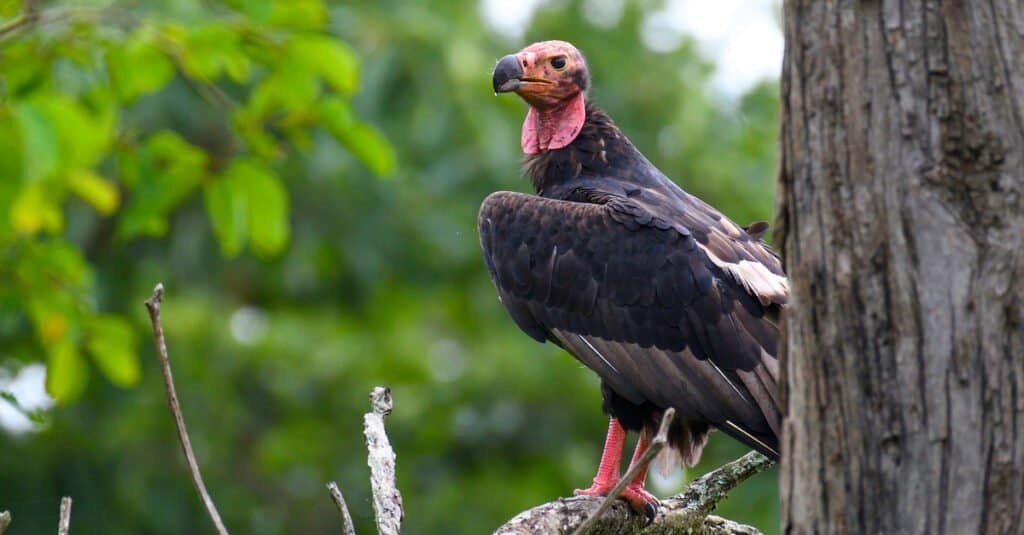
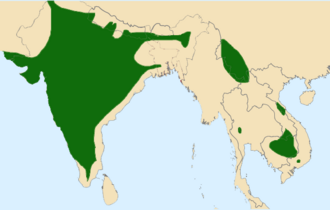
The red-headed vulture (Sarcogyps calvus), also known as the Asian king vulture, Indian black vulture or Pondicherry vulture, is an Old World vulture mainly found in the Indian subcontinent, with small disjunct populations in some parts of Southeast Asia. It is a medium-sized vulture of 76 to 86 cm (30 to 34 in) in length, weighing 3.5–6.3 kg (7.7–13.9 lb) and having a wingspan of about 1.99–2.6 m (6.5–8.5 ft).It has a prominent naked head: deep-red to orange in the adult, paler red in the juvenile. It has a black body with pale grey band at the base of the flight feathers. The sexes differ in colour of the iris: males have a paler, whitish iris, whilst in females it is dark brown. The red-headed vulture is very similar in appearance to its larger relative the Lappet-faced vulture in Africa and Arabia, even being historically placed in the genus Torgos
Identify the location and number of remaining individuals and identify action required to prevent extinction. Measure the frequency of diclofenac treated carcasses available to vultures. Support the ban on the veterinary use of diclofenac and other vulture-toxic drugs, and support species management or restoration, as needed. Continue to carry out public awareness and public support programmes. Monitor remaining populations, in particular replicate conservation and research activities that have been implemented in Cambodia in Myanmar. Provide supplementary food sources, with appropriately-sized carcasses, where necessary for food-limited populations. Support captive breeding efforts at a number of separate centres. Promote the immediate adoption of meloxicam as an alternatives to diclofenac. Test other NSAIDs to identify additional safe alternative drugs to diclofenac and also other toxic ones. Attempt to fully implement a restriction in the size of diclofenac vials sold for human use to make them less practical to use for veterinary purposes and take action against companies that fail to comply with the diclofenac ban. Continue the operation of Vulture Safe Zones and expand the network of these sites (e.g. DNPWC 2015). A comprehensive list of conservation actions proposed can be found in Botha et al.
Pharmaceutical Toxins and Diclofenac
A significant factor in the rapid decline of Red-headed Vulture populations since the 21st century is the pharmaceutical
NSAID diclofenac, used to treat livestock. This substance has proven highly toxic to vultures, leading to mortality from renal
failure and visceral gout. Recent findings indicate that Red-headed Vulture populations in India have shown signs of recovery
following a ban on diclofenac, suggesting the drug's adverse effects on the species.
Human Activities
Incidental mortality occurs in Cambodia due to the widespread use of poisons for catching fish or waterbirds at trapeangs (waterholes).
Intentional poisoning for belief-based use has also been reported in Cambodia. Additionally, the logging of nesting trees,
electrocution, and collisions with powerlines are potential threats to the species.[1]
Competition Among Vulture Species
In the shared ecosystem, dominant vulture species like Gyps vultures have a competitive advantage in scavenging on carcasses.
They typically outcompete the Red-headed Vulture for access to food resources, which can lead to food scarcity for the species.
As a result, the Red-headed Vulture may have limited access to suitable feeding opportunities, potentially affecting its survival
and contributing to its population decline.